A Calm Visual Check of a Solar Array
A solar array visual check helps you notice visible changes safely, record useful details and give a qualified solar professional clearer questions.
The common mistake during a solar array visual check is to treat a new mark or a dip in output as a cue to investigate up close. That can turn a simple observation into a risky climb, or lead to a guess about a problem that needs a professional’s assessment. From the ground, a window or another safe spot, you can notice change without touching the equipment.
The purpose is modest: build a clear picture of what looks different, when you noticed it and what you would like checked. A view of the panels cannot establish whether a system is working properly, but careful notes can help a qualified solar professional understand your concern.
A useful observation
Solar equipment is exposed to weather, seasonal light and whatever is around the home. A view that looks different from one day to another may reflect cloud, shadows or the viewing angle rather than damage. It is more useful to note a specific visible change than to decide what caused it.
Choose a place where both feet remain on stable ground, or look through an existing window. Do not climb onto a roof, ladder, balcony edge or garden structure for a better view. Avoid leaning out of windows, crossing barriers or entering a restricted area.
If you cannot see the array clearly from a safe position, leave the check there. A limited view is not a reason to find a higher one.
A repeatable view
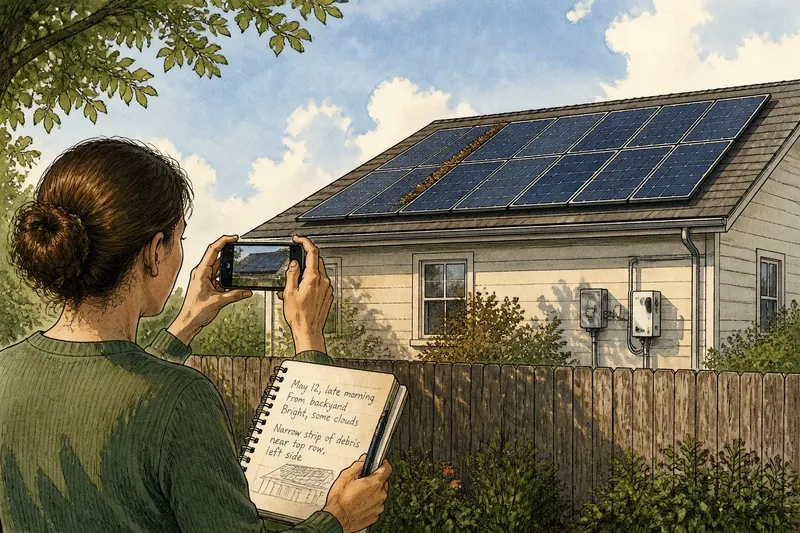
Consistency makes observations easier to compare. If possible, use the same safe viewing point and note the general conditions: bright or overcast, dry or wet, and whether nearby trees or buildings cast shadows. These details provide context without turning a glance into a diagnosis.
A phone camera can help you record what is visible, provided you can take the picture without stepping into an unsafe position. Keep the whole array in frame when practical, then take a closer image only if the detail is plainly visible from where you stand. Do not use a drone, pole or other device to approach the equipment.
- Note the date and approximate time in ordinary language, such as “late morning”.
- Record the viewing point and general weather.
- Describe what you can see, using neutral words such as “dark patch” or “loose-looking edge”.
- Say whether the appearance is new, recurring or uncertain.
- Keep images in sequence so a professional can compare them.
Imagine you notice a narrow strip of debris near one panel after a windy afternoon. From the same ground-level spot, you take a clear photograph and write down that the strip was not apparent in your previous view; the useful result is a dated record and a precise question, not a conclusion about the panel.
Visible changes to note
Look at the array as a whole before focusing on individual panels. You might notice a panel that appears displaced relative to its neighbours, an object resting on the array, a new shadow, or a visible difference in colour. Describe its position by row or side of the roof if that is easy to tell.
Some changes are subtle. A reflection can make one section seem darker, and damp surfaces or shifting shade can alter the appearance temporarily. If you are unsure, record the view and conditions rather than trying to decide whether the difference is significant.
From your safe vantage point, you may also be able to see parts of the mounting hardware, visible cable runs or the area around the inverter. Note an apparent change or obstruction, but do not touch, tug, open or move any component. Do not approach equipment that appears damaged or exposed.
Weather can leave leaves, branches or other debris near the panels. If something appears to be caught on the array, do not try to remove it from a roof, ladder, window or pole. Make a note of its location and ask the installer or a qualified solar professional what attention is appropriate.
What does a visual check tell you?
Can I tell from a photo whether a panel is faulty?
A photo can show an appearance, such as a crack-like line, an obstruction or a changed position, but it cannot confirm the cause or the electrical condition. Send the image to a qualified professional and ask what assessment is needed.
Should I check the inverter display?
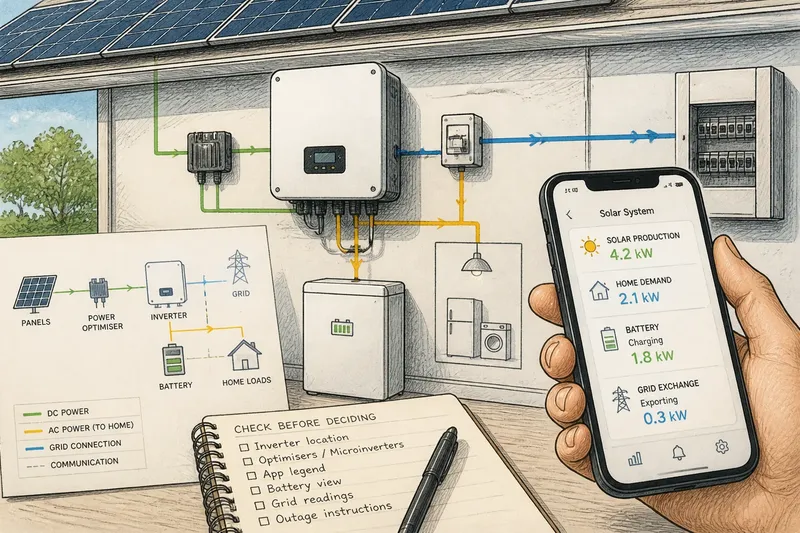
If the display is in a normal, safely accessible place, you can read it without opening a cover or handling cables. Record any message exactly as shown, along with when you saw it; avoid interpreting unfamiliar codes yourself.
What if a panel looks different in the afternoon?
Light angle, cloud and nearby shade can change a panel’s appearance. Note the time and conditions, then compare views made from the same place rather than assuming the difference signals damage.
When should I stop observing?
Stop if you would need to climb, lean, cross a barrier or approach damaged-looking equipment to continue. If you see smoke, sparks, exposed wiring or another immediate hazard, keep clear and contact the appropriate emergency service or qualified professional.
Keep a useful record
A short record is usually more helpful than a long stream of photographs without context. Use a note on your phone or a simple notebook, and separate what you saw from what you suspect. For example, “pale patch near the upper left panel” is an observation; “the panel is overheating” is an unverified explanation.
Include details that help someone identify the equipment and understand the timing. If you already have the installer’s handover documents or system records, note the system location and any relevant panel or inverter labels you can read safely. Do not climb or remove covers to find missing information.
When you contact a professional, share the clearest image, the date, your viewing conditions and any exact message from the inverter display. Ask whether the change calls for a site visit, remote review or another kind of assessment. Follow their advice rather than trying a repair based on a photograph.
Care without contact
A visual check is not a maintenance procedure. Do not clean panels, shift debris, tighten fittings, test wiring or open electrical enclosures as part of it. Even a seemingly simple task may involve roof access or electrical hazards that are not apparent from the ground.
For routine servicing, use the system installer or another suitably qualified solar professional. Equipment instructions and local requirements can differ, so follow the manufacturer’s guidance and local rules when arranging care. If you rent, contact the property owner or manager rather than attempting work on equipment you do not control.
Keep the routine occasional and calm: choose a safe viewpoint, describe what is visible, record any question and leave diagnosis and repairs to a professional. A clear solar array visual check gives a qualified person a better starting point while keeping you well away from the equipment.
Before you put the phone away, make sure the note distinguishes what you observed from what you want checked; that small edit can prevent a hunch from being mistaken for a fault report.